
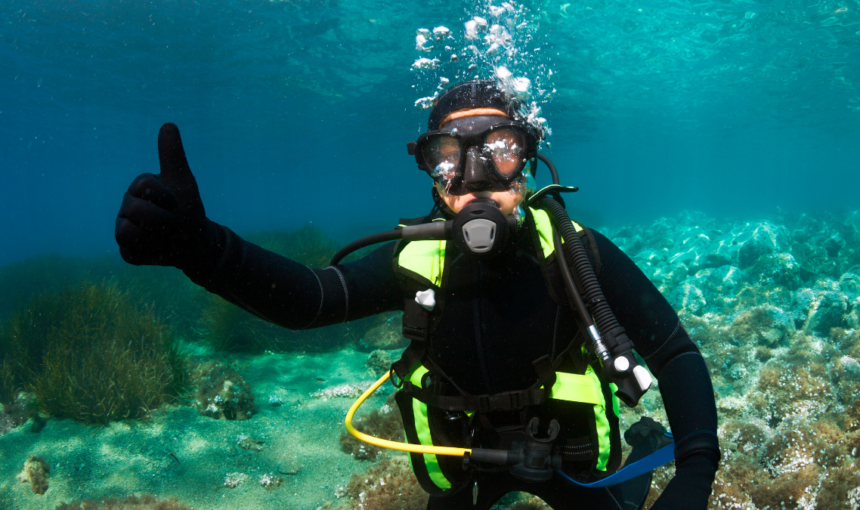
Scuba diving allows you to explore parts of the world you’d never otherwise see, but your outfit matters when it comes to feeling comfortable, safe, and confident while underwater. Diving outfits help protect your body, keep you warm, and make it easier to move around.
If you’re new to scuba diving, you might not know where to start with buying the proper outfit. Or maybe you’ve been scuba diving for years and want some tips on layering. Whatever the case may be, we’re here to help you choose the perfect outfit no matter where you’re diving.
What Is a Scuba Diving Outfit?
A scuba diving outfit consists of the clothes and accessories you wear when scuba diving. Scuba outfits are specially designed to keep you warm, help you float, and allow you to move freely while diving.
Scuba outfits typically consist of items worn on your body. Of course, this includes your scuba equipment, which you wear on your body as well. But we’re talking specifically about thermal protection and accessories you might use while diving.
Why Should You Care About Your Scuba Outfit?
You might think your scuba outfit doesn’t matter because you have all of your diving equipment on. But your outfit can mean the difference between a good dive and a bad one.
Temperature
Water conducts heat away from your body 25 times faster than air. So even if you’re diving somewhere warm, you’ll eventually become cold after being in the water for too long.
Sunburns
Your scuba outfit will protect your skin from sunburns and hazards like sharp coral and jellyfish stings.
Buoyancy
Parts of your outfit can actually help with your overall buoyancy.
Range of Motion
Your outfit can either help or hinder your range of motion.
Parts of a Scuba Diving Outfit
Scuba outfits can mean different things to different people based on where they live and dive. But here are the core essentials that make up a scuba diving outfit.
Wetsuit
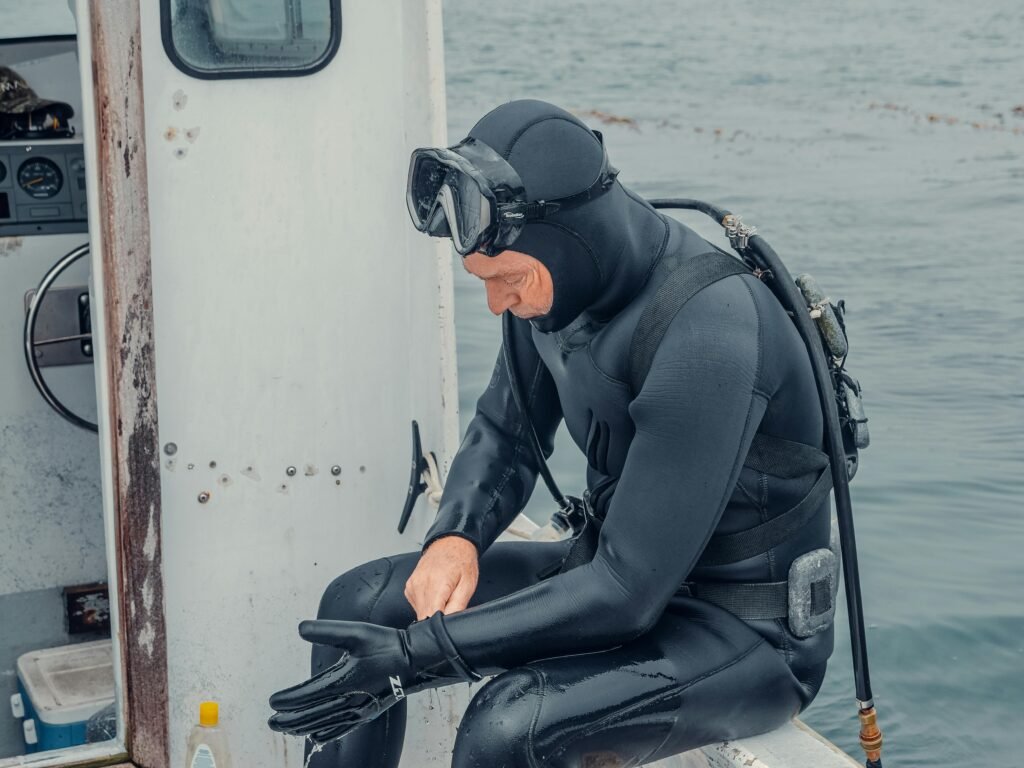
A wetsuit is one of the most common articles of clothing used when scuba diving. Wetsuits are made of a material called neoprene.
Essentially, your body heats up the thin layer of water that gets between your body and the suit, keeping you warm.
Types of Wetsuits
- Shorty Wetsuit: Covers your torso and upper thighs.
- Full wetsuit: Covers your whole body–including arms and legs.
Thickness of Wetsuits
- Anything thicker than 5mm is typically used for colder waters.
When to Wear a Wetsuit
If you’re diving in tropical or temperate environments–like oceans and other large bodies of warm water–you’ll likely want to wear a wetsuit.
Drysuit
Drysuits are similar to wetsuits in that they keep you nice and warm. The big difference is how they do it.
Dry suits:
- Are made of waterproof material
- Seal tightly at your wrists and neck.
- Allow room for you to wear thermal layers underneath
When to Use a Drysuit
You’ll definitely want to wear a drysuit when diving in colder climates. Even during cooler seasons, opt for a drysuit when diving in colder water temperatures.

Rash Guard and Dive Skin
If you’re diving in very warm water, you might not even need a wetsuit. In these cases, some divers like to wear a rash guard or dive skin.
Benefits of Rash Guards and Dive Skins
- Super lightweight and breathable
- Protect your skin from sunburns and abrasions
- Pack down small for easy travel
Wear these when diving in tropical climates with higher water temperatures.
BCD
BCD stands for buoyancy control device. Your BCD is essentially a vest that you wear while scuba diving.
What Does a BCD Do?
Your BCD allows you to maintain your buoyancy underwater. It also:
- Flotation device at surface
- Keeps your tank close to your body.
Your BCD should fit snuggly but not too tight that you can’t move freely.
Fins
Swimming efficiently while scuba diving is important. You don’t want to tire yourself out before the dive even begins!
Types of fins
- Open-Heel: Worn with booties to adjust sizing
- Full-Foot: Typically worn barefoot and thinner
How to Choose The Right Pair of Fins
You want a pair of fins that fit your waterspace. If you’re diving in colder areas, opt for open-heel fins. You’ll likely want to use full-foot fins when diving in warm, calm waters.
Mask
Just like with surfing and swimming, you want a dive mask that fits your face perfectly.
What to Look For in a Dive Mask
Look for a mask that creates a comfortable seal. Also consider masks with:
- Anti-fog lenses
- Adjustable straps
Snorkel
While you may not use this during your dive, having a snorkel on while at surface is super helpful.
Why Use a Snorkel
- Conserve your tank’s air
- Make breathing at the surface easier
Boots
If you’re wearing open-heel fins, you’ll want a pair of dive boots to go along with them.
Benefits of Dive Boots
- Protect your feet from rocks and objects
- Provide extra insulation when diving in colder water
- Increase comfort when wearing fins
Gloves
Gear like gloves are optional when building your scuba outfit. However, there are some cases where gloves come in handy.
When to Wear Dive Gloves
- Cold water
- Wreck diving
- Cave diving
- When there’s sharp coral.
Hood
A large portion of heat is lost through your head. Wear a dive hoodie to prevent heat loss.
When to Wear a Dive Hood
We recommend wearing a dive hoodie when diving in colder bodies of water. Hoods are also great for:
- Deep dives.
How to Choose Your Scuba Outfit
Before you can build your dream scuba outfit, you need to learn what factors go into choosing your outfit.
Water Temperature
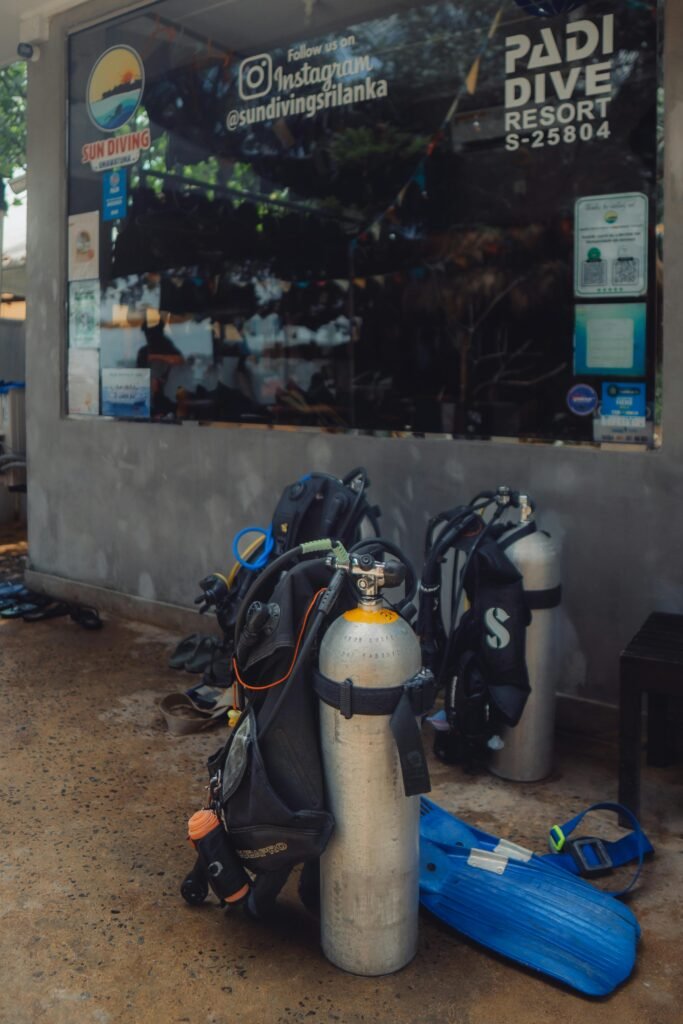
This is by far the most important factor when it comes to choosing your scuba outfit. Here’s a rough breakdown of what you should wear based on water temperature.
How Water Temperature Affects Your Outfit
- Warm water (24°C / 75°F+): Rash guard or 3mm wetsuit
- Moderate water (18–24°C / 65–75°F): 5mm wetsuit
- Cold water (Below 18°C / 65°F): Consider a 7mm wetsuit or drysuit.
Fit
Your scuba outfit should be snug. However, it shouldn’t be too tight that you’re unable to move or breathe comfortably.
- Too Tight: Restricts blood circulation and makes it difficult to breathe
- Too Loose: Allows water to fill your suit, which decreases its insulating properties.
Mobility
You’ll be swimming all over under water. Make sure you can comfortably move your limbs in your scuba outfit.
Frequency of Use
If you know you’ll be diving frequently, purchase a higher quality product. You’ll thank yourself later.
Layering your Scuba Diving Outfit
In some instances, you’ll need to wear multiple layers while scuba diving.
- Base layer: Thermal underneath drysuit
- Mid layer: Insulating garments worn under your wetsuit/drysuit.
- Outer layer: Your wetsuit or drysuit.
Scuba Outfit for Different Environments
Here’s what our ideal scuba outfit would look like for different diving environments.
Tropical
- Rash guard or thin wetsuit
- Lightweight fins
- Minimal accessories
Colder Water
- Drysuit
- Thermal layers
- Gloves and hood
Wreck / Cave Diving
- Durable wetsuit or drysuit
- Gloves
- Dive boots
Common Scuba Outfit Mistakes
Even veteran divers can make mistakes with their scuba outfit. Avoid these rookie mistakes:
- Wearing the wrong thickness.
- Ignoring the importance of fit.
- Not utilizing helpful accessories.
- Not testing your gear beforehand.
Scuba Outfit Maintenance Tips
Just like with any of your gear, you want to make sure you maintain your scuba outfit. Here are some tips to do so:
- Rinse off with fresh water after every dive
- Allow to dry
- Store properly
- Check for leaks or tears
Putting Together Your First Scuba Diving Outfit
If you’re a beginner just starting out with scuba diving, you don’t need to buy everything at once. You can easily rent gear from dive shops until you know what you want.
Essentials
Buy your mask, fins, and wetsuit. That’s really all you need to get started diving.
Rent the Rest
Should you decide you need other gear, most dive shops offer rentals of other scuba gear. This is great because you can try out the gear before you purchase it.
Final Words
Remember that your scuba outfit can make or break your dive. Make sure to purchase gear that will keep you nice and warm, but also allow you to move freely.
Investing in the right scuba outfit will allow you to have the best time diving whether you’re snorkeling in tropical reefs, diving into the deep blue sea, or diving in cold-water conditions.
Save pin for later

- 13 Things You Can Depend On Narcissists to Do - May 11, 2026
- 12 Ugly Things Women Do in Relationships(+Why They Happen) - May 11, 2026
- 8 Stages of Emotional Intimacy in a Relationship (+How to Build It) - May 10, 2026