
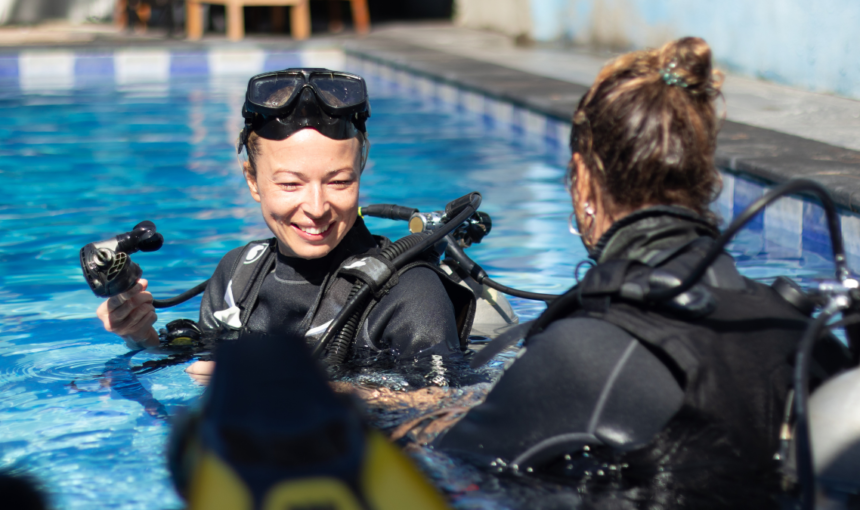
Diving is such an unreal feeling. You slip below the surface, your breath steadies, and you float weightless in this silent, colorful world full of movement and life. Many people fall in love with diving after that very first swim.
If you’ve been curious about learning to dive but didn’t know where to start, we’re here to show you. Whether your dream scuba diving destination is strolling through coral reefs, swimming with underwater creatures, or something else entirely, anyone can learn to scuba dive!
In this guide we cover everything you need to know about getting started scuba diving as a beginner.
Contents show
What Is Scuba Diving?
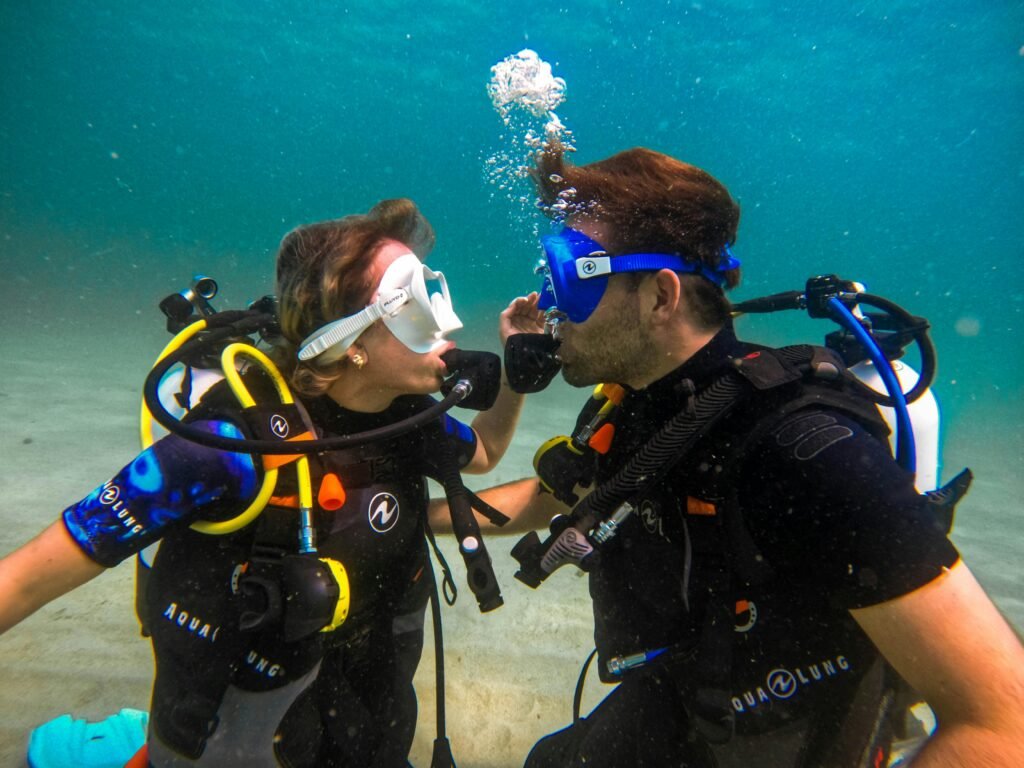
Put simply, scuba diving is underwater diving where you use special equipment that allows you to breathe underwater.
Scuba differs from snorkeling because you go deeper underwater and can stay down longer. Scuba diving opens up a whole new world most people don’t see.
There are many different types of diving too. You learn about your equipment and how to use it, how to control your buoyancy underwater, and how to move effortlessly through the ocean. It’s a smooth experience once you get used to it.
What Are the Benefits of Scuba Diving?
People take up scuba diving for many reasons, but here are some of the main benefits to get you started thinking about heading underwater.
Relaxing in nature
Instead of observing nature on land, you are swimming amongst it underwater. Schools of fish swirl around you, colorful corals tower above you, and coral creatures crawl all around you. You get to explore a living world on each dive.
Floating feels effortless
There’s no up or down underwater, you just float! Moving around is relaxing since you can glide, hover, and move any direction with ease. It’s the closest you’ll ever feel to flying on earth.
Quiet mindfulness
Slow and controlled breathing is required when scuba diving, as is being aware of your surroundings. Beginners are surprised how relaxing they find diving. It’s kind of like meditation.
Fun new experience
Scuba diving is an adventure sport you can enjoy around the world! Once you get certified, you can dive anywhere on the planet that has water. Learning to scuba dive opens up a world of opportunities.
Build confidence and knowledge
Don’t let the technical gear scare you! Scuba diving is an activity you can learn like any other. You gain new skills and confidence each time you dive. Learn scuba and travel the world!
Is Scuba Diving Safe?
Yes! Dive training is extremely safe thanks to set standards and rules to follow. There is always a level of risk when participating in any sport. Especially ones such as scuba diving where you venture into the unknown.
That being said, millions of people dive safely each year. Scuba diving involves slowly learning the fundamentals before taking the plunge. You learn about equipment, how to use it, and best practices for your safety.
Scuba diving can be an incredible experience when approached with care and the right mindset.
How Do I Get Started Scuba Diving?
To get started scuba diving, take a beginner’s course! These courses are geared towards anyone who has little to no experience with diving.
Most courses will teach you the basics of scuba theory such as how diving works and dive safety rules. Then take you to a pool or shallow open water to practice and eventually complete an open water dive.
You will learn everything you need to know to scuba dive safely with a friend!
You learn at your own pace by using online resources or in-person training. Pick what works best for you!
Start by diving in beginner-friendly locations with nice calm and clear water that’s not too deep. Once you get comfortable with your skillset you can pick more challenging dive sites.
Basic Scuba Diving Equipment for Beginners
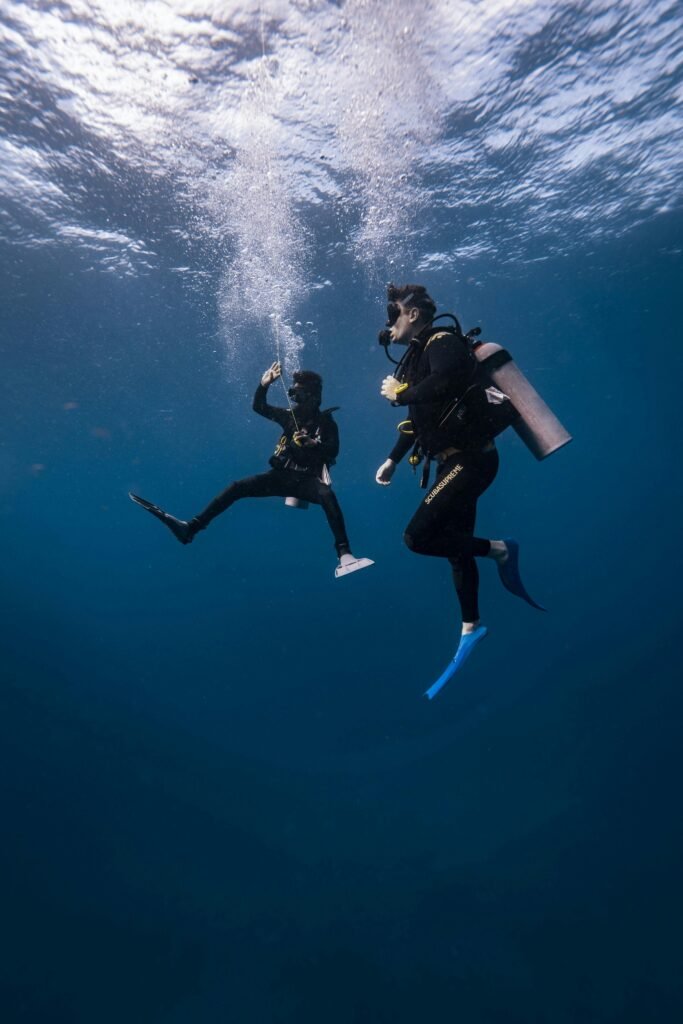
There are many types of gear you can use as a scuba diver but here is the basic list. You don’t need to buy all this equipment yourself since dive centers typically rent it out.
Mask: Allows you to see clearly underwater
Snorkel: Used to breathe while at the surface
Fins: Allows you to swim gracefully with less effort
Wetsuit or Drysuit: Provides insulation and protection for your body
Buoyancy Control Device (BCD): A vest that helps you float or sink in the water
Regulator: Provides you with air to breathe from your tank
Tank: Container that stores compressed air for your dive
Dive Computer: Computer that tracks your depth, dive time, etc.
Try not to overthink it! There’s a lot of gear but you won’t use it all until later.
What Should I Expect During My First Dive?
Your first scuba dive will feel surreal. Nerves and excitement are normal!
Here’s what you can typically expect during your first scuba dive:
Equipment orientation
Meet your instructor and learn about the gear you will use.
Pre-dive safety check
Your instructor will go over the dive plan and any safety topics.
Entry into the water
Get used to your equipment and practice some basic skills.
Descent
Slowly make your way down and enjoy the view as you go deeper.
Enjoy yourself!
You should be freed up from your instructors guidance and allowed to explore.
Ascent
Return to the surface slowly and safely.
Debriefing
Meet back up with your instructor on land and discuss how everything went.
Remember, your first couple dives will always be shallow and led by your instructor. There’s no rush!
Scuba Diving Safety Tips for Beginners
Before you take the plunge, learn about scuba safety rules! While diving has always been fairly safe, it is always good to be extra careful. Learn the rules of scuba diving below:
Never hold your breath
You should breathe continuously when scuba diving. Holding your breath can be extremely dangerous.
Always dive with a buddy
You should never go diving alone. Dive with a partner!
Check your equipment beforehand
Before every dive, you want to make sure your scuba equipment is in working order.
Ascend slowly
Ascending too quickly can cause decompression sickness. You want to make sure you slow back down to the surface.
Equalize early and often
Need to go deeper? As you descend, remember to equalize your ears to account for pressure.
Keep track of your air
Make sure you keep an eye on your air and don’t run out!
Common Mistakes Beginners Make When Learning To Dive
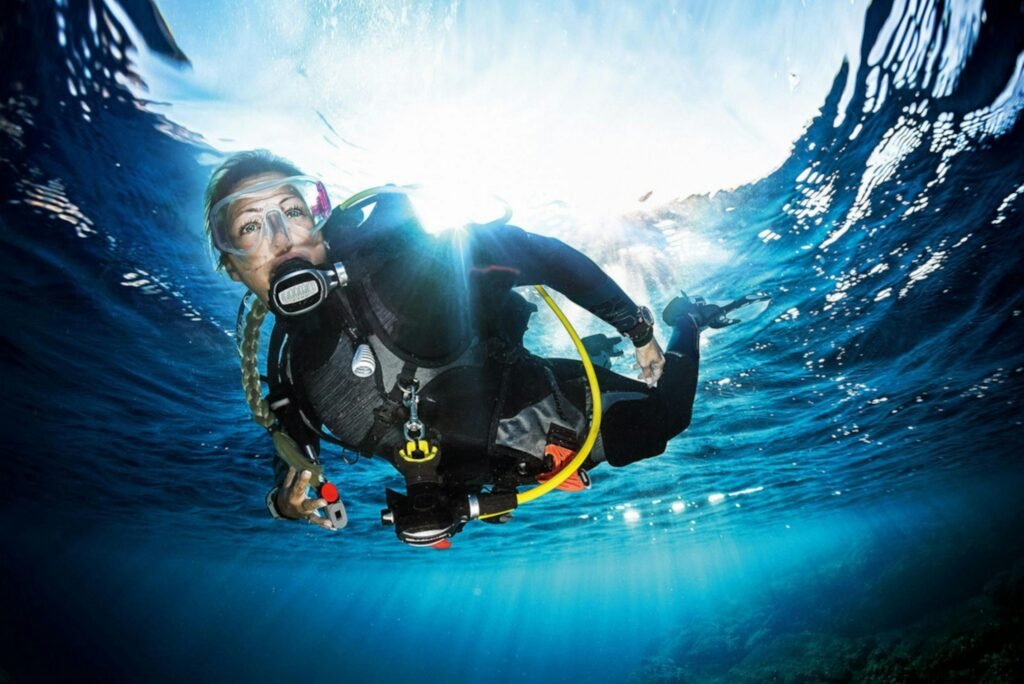
And no you’re not alone if you make these mistakes. I did too when I first learned to dive. Read below for some common errors and how to avoid them.
Hurrying
There is no rushing when scuba diving. Relax and take your time.
Breathing
Breathing feels weird when you first get used to diving. Take slow deep breaths and you’ll be fine.
Buoyancy issues
Improves with practice! If you feel like you’re sinking or floating too much, just try to relax and adjust accordingly.
Anxiety
Don’t worry! Try to relax and learn how to breathe properly.
Fishies You’ll See On Your Dive
You’ll likely see fish even on your first beginner dive! Here are some common creatures:
Beautiful reef fish
Sea turtles
Sea stars
Rays
Corals
Friendly sharks
Who knows, you might even spot a few dinosaurs?
Kidding we didn’t see dinosaurs. But you get the point!
Types of Diving You Can Try Later On
Like any activity, there are several styles of diving you can get into. Once you get the basics down try exploring these scuba diving styles:
Reef diving
Drift diving
Night diving
Wreck diving
Cave diving
Stay in Shape for Scuba Diving
Scuba diving isn’t a sport for professional athletes. However, being in generally good shape can make your diving experience more enjoyable.
Ideally you want to be:
Comfortable swimming
Have some endurance
Free of serious lung diseases
As long as you’re able to swim, you can dive! If you have any health concerns consult with your doctor before starting dive training.
Tips to Have the Best Dive Ever
Here are a few tips to help you out on your first dive:
Relax and Breathe
Ever heard the saying “don’t forget to breathe”? When diving its even more important to breathe slow, deep breaths!
Listen to your instructor
Your instructor is there to help you! If you have any questions, don’t be afraid to ask.
Don’t rush
You got this! Enjoy the dive and take your time.
Scuba diving is supposed to be relaxing so take your time and enjoy yourself!
Be Environmental Conscious
Lastly, you should always be aware of your environment and dive responsibly. You are a visitor in these animals’ homes. Maintain proper buoyancy and watch where you place your hands.
Practice keeping environmental awareness and follow these tips:
Do not touch coral or sea life
Avoid stirring up the sand with your fins
Use proper buoyancy control
Never litter
Keep a safe distance with wildlife
Help keep our oceans beautiful for everyone to enjoy!
Conclusion
Scuba diving is easy to learn for anyone interested. Sure there is a lot of new information to take in but you’ll pick it up quickly!
Don’t be afraid to try something new and pick up scuba diving today. You’ll be exploring a whole new peaceful world in no time!
Happy diving.
Save pin for later

- 13 Things You Can Depend On Narcissists to Do - May 11, 2026
- 12 Ugly Things Women Do in Relationships(+Why They Happen) - May 11, 2026
- 8 Stages of Emotional Intimacy in a Relationship (+How to Build It) - May 10, 2026