Tuscany is one of the most iconic regions in Italy. Imagine rolling hills and medieval hilltop towns, vineyards as far as the eye can see, cypress-lined roads, and cities bursting with art at every turn. You can spend days strolling the cobblestone streets getting lost (and found) or kicking back with a glass of wine while the sun sets over a villa in the countryside. Florence, Siena, and Pisa are all accessible by train or bus, but the real heart of Tuscany can only be experienced by car.
Renting a car opens up the region to villages off the beaten path, hidden wineries, and countryside drives that will make your time in Tuscany unforgettable.
But if you’ve never rented a car in Tuscany (or in Italy at all), the process might feel daunting. From local driving rules to rental car agencies, there are a lot of details that can make or break your experience. This guide covers everything you need to know about renting a car in Tuscany, step by step, so you can relax and enjoy your Italian road trip.

Rent a Car in Tuscany: Why You Should Do It
Let’s back up for a second to understand why all this is worth it.
Renting a car gives you the freedom to explore places that public transport doesn’t cover, like remote villages and the rural countryside. The rental car also gives you flexibility in terms of schedules, as you’re not tied to buses and train timetables.
You also won’t be able to enjoy the scenic drives Tuscany is famous for without a car. Whether you’re winding through Chianti or driving the white gravel Strade Bianche, the views are absolutely postcard-worthy.
The flexibility a rental car offers allows you to visit all the hidden gems you’ll discover on your trip. Small towns like San Gimignano, Montepulciano, and Pienza are easiest to access by car.
In short, if your trip is focused on Florence or Pisa only, you may not need a car. But if you want to experience the countryside, vineyards, and small towns that make this region so special, renting a car is the best way to do it.
Step 1: Decide Where to Rent Your Car
Most visitors start in Florence, Pisa, or Rome. You can rent a car in all three, but the right decision depends on your travel plans.
Florence: Renting a car in Florence can be stressful since there’s traffic and very limited driving zones (ZTLs) in the historic center. If you’re starting in Florence, consider renting from Florence Airport (Peretola) and then driving out of the city rather than dealing with the city center traffic.
Pisa: Pisa Airport is another easy option for car rentals. If you plan to visit the Leaning Tower as soon as you arrive, you can pick up your car after and head directly into the Tuscan countryside.
Rome: If you’re starting your trip in Rome, you could drive up to Tuscany as a road trip and rent a car in Rome itself. As with the other cities, rental car agencies at Rome Airport make it easier than going into the city center.
Tip: Make sure your rental agency location is not in the city center but at the airport. Often, there are misleadingly named “Florence” rentals that are actually at the airport, which is more convenient anyway.
Step 2: Choose the Right Rental Company
The big international companies like Hertz, Avis, Budget, and Europcar are all in Tuscany. You can also find local Italian rental companies, which may offer cheaper prices. When picking a rental company:
Check Reviews: Read feedback from other customers about hidden fees, customer service, and the car’s condition.
Compare Prices: Use websites like Rentalcars.com, DiscoverCars, or AutoEurope to compare between companies.
Read the Fine Print: Make sure you understand the mileage limits, fuel policies, and insurance coverage.
Often, going with a well-known international brand will cost a bit more, but will be worth it in terms of peace of mind if any issues come up.
Step 3: Documents You Need
Before you can rent and drive a car, you need the following documents:
Valid Driver’s License: If you’re from an EU country, your license is valid in Italy.
International Driving Permit (IDP): If you’re from a non-EU country (e.g. U.S., Canada, Australia), you’ll need both your driver’s license from your home country and an IDP. The IDP is a simple document that translates your license to Italian, and can be obtained ahead of your trip.
Credit Card: Rental agencies usually require a credit card in the driver’s name to hold the deposit on the car. Debit cards are often not accepted.
Passport: You’ll always need this, as rental agencies often ask for it.
Step 4: Choosing the Right Car
When choosing the right car for driving in Tuscany, keep a few things in mind.
Size: The narrow roads of Tuscany (especially in small villages) can be a tight squeeze. A compact car is usually better than a larger SUV.
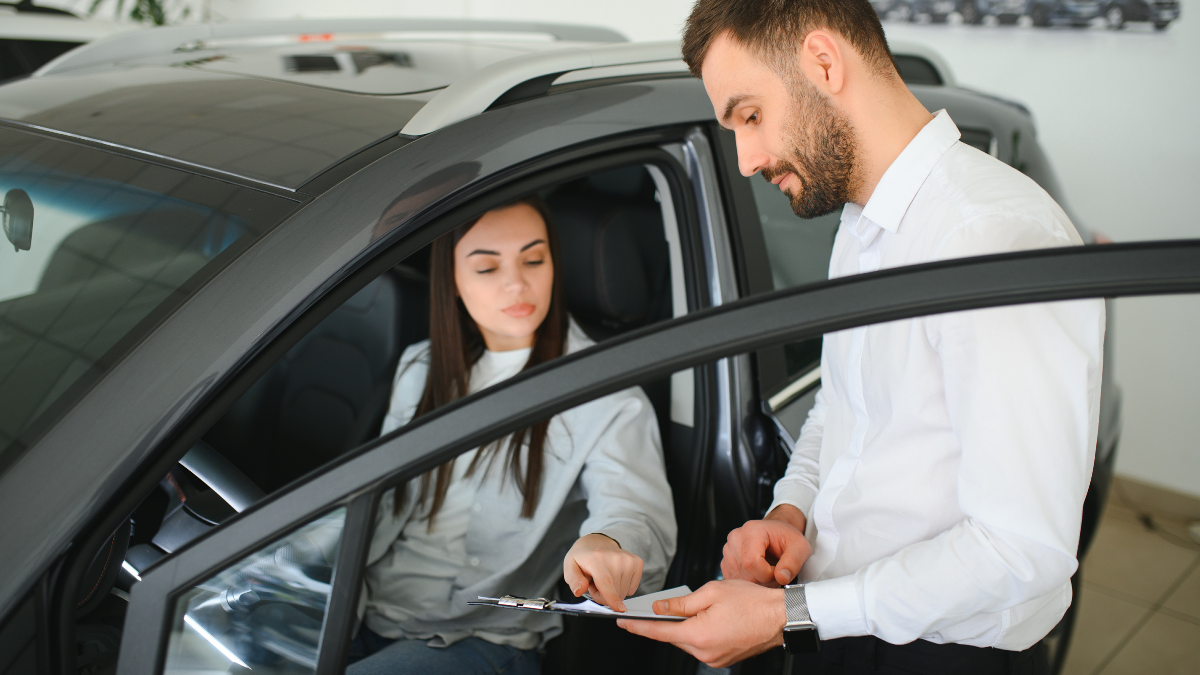
Manual vs. Automatic: Manual transmission is more common in Italy, so they’re more widely available and cheaper. Automatic cars are available but more expensive and book out fast, so reserve in advance if you need one.
Fuel Type: Rental cars in Italy are more likely to be diesel, which is better for fuel efficiency on longer trips.
Space: Make sure the car is big enough to fit you and any luggage or family members comfortably, but balance that against the road size.
For most travelers, a compact manual car is the best option.
Step 5: Understanding Insurance
Car rental insurance is one of the more confusing parts, so let’s clear it up.
CDW (Collision Damage Waiver): This is usually included, but will likely have a large deductible if there’s an accident.
Theft Protection: This protects against theft of the car, but not personal belongings inside it.
Super CDW or Zero-Excess Coverage: Optional coverage that lowers your deductible to zero in case of an accident. It’s more expensive but has peace of mind benefits.
Third-Party Liability: Covers damage to others; this is required by law.
If you book your rental through a third-party website, check that insurance is included, or if you have to buy it separately. You may also get rental insurance included with your credit card. Check your benefits before purchasing extra.

Step 6: Driving in Tuscany – What to Know
Driving in Tuscany can be a dream. The roads are beautiful, the countryside is breathtaking, and it’s so easy to stop anywhere and explore on foot.
But there are a few rules and challenges to be aware of:
ZTL Zones: Zona Traffico Limitato, or restricted traffic zones, are parts of historic towns where non-local cars are not allowed. Florence, Siena, Lucca, and other towns all have ZTLs with steep fines for entering. Look for signs on the roads to know where the ZTL starts and use a parking lot outside. Then walk or take public transport to go into town.
Speed Limits: On the autostrada (highways), the speed limit is 130 km/h (80 mph). On country roads, it’s 90 km/h (55 mph), and in towns, 50 km/h (30 mph).
Roundabouts: Roundabouts are very common in Italy, so watch out for them. Always yield to the cars already in the roundabout.
Toll Roads: Most highways require tolls, so have some cash or a card on you to pay.
Parking: Blue lines on the street are paid parking, white lines are free, and yellow lines are reserved for residents. Look for signs and street parking signs.
Step 7: Navigating the Roads
Ok, you’ve rented your car and understand the laws and rules. Now, how do you get around?
GPS and Maps: Rental cars in Italy often come with GPS, but it can be hit or miss. Use Google Maps instead, or download offline maps to your phone.
Scenic Routes: Just because there’s a highway that cuts the journey time in half doesn’t mean you have to use it. Take the back roads and drive through the Chianti region or Val d’Orcia for some of the best views.
Fuel Stations: Gas is more expensive in Italy than in other countries. Stations are often self-service, but others have an attendant. Just remember to ask for “benzina” (gasoline) or “diesel” correctly, or they won’t know what you mean.
Step 8: Costs to Expect
If you rent a car in Tuscany, here are some of the costs you might incur:
Rental Price: €30–60 per day, depending on season and car type.
Insurance: Additional €10–20 per day for full coverage.
Fuel: Approximately €1.80–2.00 per liter.
Tolls: Highway tolls vary based on how far you drive. Florence to Rome will cost you about €20–25 in tolls.
Parking: €1–3 per hour in most cities.
It adds up, but it’s totally worth it.
Step 9: Best Road Trip Itineraries in Tuscany
Got your wheels? Now where to go? Here are a few classic road trip itineraries to consider.
Chianti Wine Route: Florence to Greve in Chianti to Castellina to Siena. The classic wine tour.
Val d’Orcia: Siena to Pienza to Montepulciano to Montalcino. Iconic views and some of the best wine in Italy.
Medieval Towns Tour: Florence to San Gimignano to Volterra to Lucca. Perfect for history buffs.
Coastal Drive: Pisa to Livorno to Maremma to Grosseto. Great for summer seaside towns.
Step 10: Tips for Smooth Rental Experience
Here are a few more tips to make the process of renting a car in Tuscany even better:
Book as early as possible, especially in the summer when travel is busy. This will help you get the car and rate you want.
Always inspect the car before driving off and take photos of any existing damages.
Bring some coins with you for parking meters and tolls.
Don’t drive in the big cities. Park outside and take public transport in.
Learn some basic Italian driving terms: “uscita” (exit), “pedaggio” (toll), “benzina” (gas).
Conclusion
Renting a car in Tuscany may seem intimidating at first, but it’s the best way to explore this part of the world. With a car of your own, you can visit medieval towns perched on top of hilltops, drive through vineyards lit up with golden late-afternoon sun, and stop at off-the-beaten-path trattorias where you’ll eat the best food of your life.
This step-by-step guide will help you choose the right rental company, understand the insurance options, know the driving rules, and plan the best scenic road trips in the region. So follow our advice, rent a car in Tuscany, and prepare to be enchanted by this magical part of Italy.
Save pin for later

- Ultimate March Nails: Trendy Nail Ideas to Welcome Springtime - March 21, 2026
- Ultimate Summer Bucket List Poster: Template + Ideas (+ Printable) - March 17, 2026
- Top Summer Bucket List Ideas (+100 Activities for Summer) - March 17, 2026