
Packing your suitcase is a travel task that many people tend to either dread or rush through at the very last minute. The result? Heavy luggage that can end up costing extra to transport or causing back pain and logistical headaches throughout your trip. Before heading out on any journey—whether a local weekend excursion, a cross-country family vacation, or a work trip abroad—take a few minutes to plan your packing strategy.
With these top 10 packing tips, we’ll teach you everything you need to know about efficient suitcase organization, from creating a useful packing list to using packing cubes and versatile clothing. We’ll also share expert packing hacks that save space and simplify your travel logistics so that you spend less time stressing about your luggage and more time having fun on your adventures.
10 Packing Tips
1. Make a Packing List Before You Start
It may sound like a no-brainer, but one of the best packing tips is to create a list of all the items you plan on bringing. If you head to the airport or station with no plan and just start throwing things in your bag, you may end up forgetting important travel documents, packing too much, or overpacking items like shoes or bulky coats.
Print out or write down a packing list on a notepad. To make it as useful as possible, separate your list into categories:
Clothing (tops, bottoms, shoes, outerwear, undergarments, socks, sleepwear)
Toiletries (travel-sized toiletry set, toothbrush, toothpaste, deodorant, skincare, hair products)
Electronics (phone, laptop/tablet, chargers, adapters)
Documents (passport, tickets, ID, insurance information)
Miscellaneous (snacks, reusable water bottle, travel pillow, entertainment)
Pro Tip: Keep your packing list saved as a digital document on your phone or computer so you can easily find and reuse it for your next trip. As you travel more, you can fine-tune it to make sure you only include items you actually use and take on most of your trips.
2. Choose the Right Luggage
Your suitcase or bag is the foundation of your travel packing. Depending on your personality and travel style, you may prefer to carry on or check a bag, or you may need both. If you’re taking a flight, a carry-on is the easiest way to avoid going through baggage claim. On the other hand, a checked bag is convenient for longer trips or destinations with a lot of wardrobe variety.
Carry-On Luggage: Perfect for short trips or light travelers who want to save time and avoid baggage fees. Make sure the size is within the airline’s carry-on restrictions (about 22 inches tall, width, and depth).
Checked Bags: Great for long trips or packing more variety in your wardrobe. Choose a lightweight, durable bag with good wheels.
Backpacks: Ideal for flexible or adventurous travelers or if you’ll be moving around a lot.
Choose a suitcase or bag that is durable, lightweight, and features different compartments or expandable sections for easy organization.
Pro Tip: Be sure to check your airline’s baggage policy before traveling. Dimensions and weight limits can vary, and if you’re not prepared, you can be hit with expensive fees at the airport.
3. Roll, Don’t Fold
To save space and keep your suitcase organized, you should roll rather than fold your clothes when packing. Rolling takes up less room in your bag, and the items come out less wrinkled compared to folding. It’s also easier to see all your items at a glance when you open your bag.
Roll bulky items like jeans and sweaters to compress them and save space. For delicate or formal clothing, you may want to use a packing cube or garment folder instead.
If you’re traveling for business and packing dress shirts or other formal items, you may still want to fold these. For casual clothes, though, rolling is the best way to save space.
Pro Tip: Roll clothes with as tight a circle as possible to save the most space. Roll using packing cubes (tip #4) for the most effective organization.
4. Use Packing Cubes
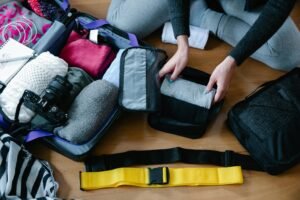
Packing cubes are fabric bags that act as portable “drawers” for your suitcase. Use them to organize your luggage by separating clothing by type (shirt, pants, undergarments) or by outfit (morning, night, sports). You can even use cubes to pack one outfit per cube or one day per cube so that everything is easily accessible.
Benefits:
Easy unpacking: Just grab a cube and take it out of your suitcase.
Easy organization: Keep your clothing neat, even if you live out of a suitcase.
Space saving: Compress clothes to save space.
Bonus: Some travelers use compression bags for items like jackets and sleeping bags to further reduce the space they take up. Note that compressing these items will make your bag heavier more quickly.
Pro Tip: Label each packing cube with its contents or use different colors so you can easily spot what you need without having to open every bag.
5. Pack Versatile Clothing
One of the most common travel packing mistakes is bringing too much stuff you’ll never wear on your trip. The key to smart suitcase packing is to pack versatile clothing that can be used to make multiple outfits and mixed and matched with each other. Select clothing that has neutral or complementary colors that go well together, and stick with pieces you can layer if necessary.
Pack tops and bottoms that coordinate easily with each other.
Wear shoes that can handle both casual and somewhat dressy situations.
Bring layering items, such as cardigans, scarves, and light jackets.
As a basic rule, if you pack three tops and three bottoms that all match, you can create at least nine separate outfits. Add in a couple accessories, and you’re good to go.
Pro Tip: Check the weather and climate of your destination before you leave so you know exactly what to expect and don’t overpack. For example, a week in humid Florida is different from a week in sunny San Diego.
6. Don’t Overpack Shoes
If there’s one item you need to avoid overpacking, it’s shoes. They’re bulky, heavy, and take up a lot of space in your suitcase. Most of the time, you only need to pack two pairs of shoes, max:
Comfortable walking shoes (flip flops, sandals, or sneakers depending on your destination).
One dressier pair of shoes (flats, loafers, or low heels).
If you’re bringing specialty shoes for an activity (water shoes, hiking boots), you can bring a third pair.
Wear your heaviest shoes (winter boots or hiking boots) while traveling to save space.
Pro Tip: To squeeze every last inch of space out of your luggage, stuff small items like socks, belts, or undergarments into your shoes.
7. Follow the 3-1-1 Rule for Liquids
If you’re flying and planning to bring any liquids in your carry-on, you must abide by the TSA’s 3-1-1 rule for packing toiletries.
Containers must be 3.4 ounces or less (100ml or less).
Containers must all fit in 1 quart-sized clear plastic bag.
You can bring 1 bag per passenger.
Items like shampoo, conditioner, body wash, and soap all come in travel sizes. Another option is to buy reusable silicone bottles that you can fill with your own liquids at home.
Pro Tip: Solid toiletries (bar soap, shampoo, conditioner, and lotion sticks) are an environmentally friendly way to avoid the liquid rule altogether.

8. Don’t Forget Travel Essentials
In addition to clothing and toiletries, there are a few other travel essentials that are important to remember. We recommend packing the following in every suitcase:
Reusable water bottle (drink water on the go without buying plastic bottles).
Portable charger/power bank for your phone and other electronic devices.
Universal travel adapter if you’ll be traveling abroad.
Noise-canceling headphones or earplugs for flights.
Travel pillow and eye mask for sleeping while traveling.
First-aid kit (band-aids, pain relievers, prescription medications).
Pro Tip: Keep all of your important items—passport, tickets, money, electronics—in your carry-on luggage and never in your checked luggage.
9. Weigh Your Bag Before Leaving
To ensure that your suitcase doesn’t surpass your airline’s weight limit, use a small luggage scale to weigh your luggage before you leave for your trip.
If your bag is close to the weight limit, consider wearing your heaviest items (boots, coat, etc.) on the plane or moving weight from checked luggage to your carry-on.
Pro Tip: Leave some empty space in your suitcase for souvenirs. If you plan on shopping or are bringing any gifts, packing light at the start of your trip will relieve stress later on.
10. Pack a Personal Item Wisely
Many airlines allow passengers to bring one carry-on bag and one personal item (backpack, tote, duffel bag). While your carry-on is for big items and luggage, the personal item is perfect for things you need to access during your flight or right after you land. The most important items from the above tips also go in this bag (electronics, travel documents, medications).
Good items to bring in your personal bag include:
Passport, ID, and other travel documents.
Wallet and money belt.
Electronics and chargers/adapters.
Headphones, books, or magazines for entertainment.
Snacks to take on the plane.
Toiletries like lip balm, hand sanitizer, toothbrush, or facial wipes.
Pro Tip: A backpack is usually the best type of personal bag to bring since it leaves your hands free and fits under the seat more easily.
Bonus Tips
Since trips are so different depending on where you’re going and why you’re going there, here are a few additional packing tips for all kinds of situations:
Do laundry on the road: Bring enough clothes to last your entire trip and wash some at the halfway point. Laundry services are usually inexpensive when you’re traveling and do most of the work for you.
Use digital copies: Scan and store a digital copy of all your important documents (passport, travel insurance, train/bus tickets, etc.) in a secure online folder.
Practice minimalism: If you don’t use it at home, you probably won’t need it on the road either. Aim to travel as light as possible.
Pack snacks: Granola bars or nuts are great travel snacks in case you get hungry during a layover or flight delay.
Conclusion
Travel packing is easier when you are prepared and organized. By following a list, using packing cubes, rolling your clothes instead of folding, and following other expert tips, you can cut down on the stress of getting ready to travel. The more you do it, the easier it will become.
Packing is not about how much you can fit into your suitcase. It’s about only bringing what you need to feel comfortable and have a good time. By traveling light and packing smart, you can avoid extra fees, travel lighter, and have more peace of mind on your adventures.
We hope these top 10 packing tips will help you prepare for your next trip. So before you run out the door for your next adventure, slow down and take the time to follow this expert guide to packing like a pro. Your future self on the road will thank you.
Save pin for later

- Ultimate Summer Bucket List Poster: Template + Ideas (+ Printable) - March 17, 2026
- Top Summer Bucket List Ideas (+100 Activities for Summer) - March 17, 2026
- Summer Bucket List Ideas to Help You Enjoy the Season - March 16, 2026