Flight aesthetic: it’s more than a buzzword or photo filter—it’s a full mood. Once upon a time, airplanes existed solely for getting you from Point A to Point B.Then at some point, the whole thing changed.
Flying became an experience. Airports, airplane seats, and inflight service? They have moods, rituals, aesthetics, and feelings.
Flight aesthetic is so much more than a stunning shot out the airplane window. It’s the calm detachment that comes from floating between places and lives, the specific (and very visual) calmness of airports, airplane trays and meals, the anticipation of leaving or arriving, cabin lights and nighttime travel, engine sounds and white noise, and that odd mix of stillness and momentum that happens above the clouds.
In this post, we’re diving into everything you’ve been wondering about flight aesthetic. What is it? Why does it feel so strong? How does it look (visually and emotionally)?

Let’s get into it.
What Is Flight Aesthetic?
Flight aesthetic is the mood, visual elements, and emotional tones that people associate with flying. It’s a mix of both internal and external feelings and senses. Visually, emotionally, and atmospherically, flight aesthetic refers to the overall mood associated with the following.
Pre-flight moments
The flight
The return to normality and everyday life when you land and arrive
Flight aesthetic is usually made up of:
Airplane windows, window views, and airplane cabins
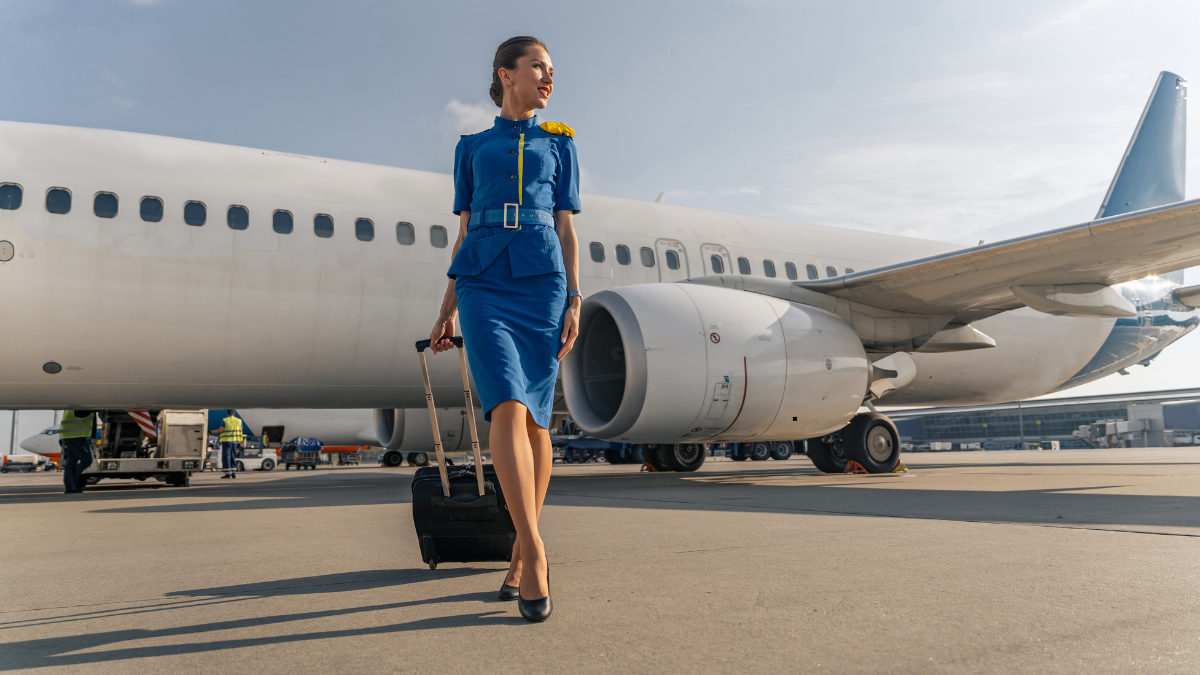
Airports, planes, and terminals
Interior design choices
Flight check-ins, boarding passes, and similar rituals
Flight-specific imagery such as engines, empty seats, or airplane tray tables
Flight aesthetic is also the feeling and vibe you get from these things visually, including:
Suspension and stillness, the feeling of being in between or not-yet
Anticipation of the unknown or the expected
Detachment from normal responsibilities and obligations
Inner quiet and even calmness
Reflection
Observation
Isolation in public
Flight aesthetic also evokes the following internal feelings and emotions.
Freedom
Movement
Grounding or momentum
Shifting perspective and feelings of transformation
Flight aesthetic is as much about being in a crowded terminal or shoving your way through the overhead bin in economy as it is about lounge access and airport bathrooms with your name on it.
Flight aesthetic is more than luxury—it’s both budget and premium.
Why Does Flight Aesthetic Feel So Strong?
Flight Aesthetic and the Liminal Space Effect
The reason flight aesthetic feels so deeply emotional and specific is because of what the flight process actually is: liminal space.
You are not where you were. You are not yet where you’re going. Time is out of joint. There’s nothing you can do but wait.
Flying is living in a temporal limbo. It’s the gap between chapters. It’s an oddly beautiful kind of in-between-ness, and because of that, it feels like a space for reflecting on the past and future. We think about who we were, where we were coming from, and where we’re going.
Flying forces a mental shift and allows for space to reflect on the internal and external journeys we’re on.
Flight Aesthetic Exists Because Modern Life Rarely Slows Down—Flying Forces It To
We are reachable nearly all of the time. We’re expected to respond to calls, texts, and notifications. There’s always a conversation or call we’re expected to return. Our schedules are dictated and managed by meetings and appointments.
Flying is a chance to hit pause on that for a time. Your phone must go on airplane mode. The time and destination of your flight is set. Your only job is to board the flight and arrive at your destination.
Travel makes this whole thing about movement and momentum feel more intentional, and that gives the entire flight aesthetic more emotional depth.
Humans Are Drawn to Movement and Motion, Inherently Romanticizing Movement and Transport
Trains. Boats. Planes. Humans love transport and movement, which is why the romance of each has always been strong. Travel is about shifting location and physical space.
Flying takes that to the extreme and also has a slightly surreal quality to it. You’re sitting in a long tube of metal, miles above the ground, watching fluffy white clouds like ocean waves pass by in the distance. It’s strange.
Flight aesthetic reminds us of that surreal otherness of flight: ordinary things in extraordinary spaces, everyday lives and routine business just existing way up in the air.
Flight Aesthetic and the Visual Aesthetic of Flying
Airports and Airplane Terminals
Airports are more than just transportation hubs. They have a visual aesthetic and style all their own.
The long, high ceilings. The expansive glass walls and windows. The clean lines and orderly circulation. The bright or dim lighting. The constant flow of bodies and movement.
Airports feel contained and infinite all at once. Mornings feel contemplative, late-night terminals feel moody, and big international airports feel alive. Even minor variations and details of airports can create wholly new takes on the flight aesthetic.
Airplane Windows and Windows in the Sky
Airplane windows may just be the single most iconic flight aesthetic. Think of how your brain responds to the first sight of those big oval windows when you board the plane.
Flight aesthetic would be nothing without the layered clouds, early morning sunlight at cruising altitude, twinkling city lights at night, mountain ranges seen from above, and giant swathes of perfectly empty ocean.
Flight aesthetic is all about scale and perspective. Flying makes us aware of how small and ordinary our day-to-day lives are in comparison to the landscapes and skies around us. It’s that perspective shift that makes airplane windows and flight aesthetic so powerful and emotional for so many of us.
Cabin Lighting and Interior Mood of Flying
Airline cabins are also getting a lot more intentional with lighting design.
Soft blues and purples, dim overhead lights, calming, and grounding tones are now common on long-haul flights, often with the goal of reducing jet lag. Trays come down, food and drink are served, and then those lights get dimmed even lower for nighttime flights.
That’s when the magic of collective stillness really sinks in. Cabin lights are down. People are awake, sleeping, reading, or somewhere in between. There’s something intimate about flight aesthetic that this creates without requiring interaction with those around you.
Flight Aesthetic and Emotional Experience
Flight Aesthetic and Anticipation Before Takeoff
Have you ever noticed how emotionally charged the moments before takeoff are? You’re past security. You’re at your seat. The doors are closing. Your world is narrowing to the small space you will occupy for hours and hours.
Excitement builds. Anxiety and fear rise. Even if you hate flying, there’s an edge, an emotion to sitting down and committing to the process of being moved across the sky.
Flight aesthetic also involves this pre-takeoff energy. It’s that feeling of possibility, choice, and movement. You’re going somewhere. You’ve chosen momentum.
Flight Aesthetic, Reflection, and Change of Perspective During the Flight
Once you’re above the clouds and cruising, emotions tend to level off a bit. People do different things. They journal, read, listen to music, stare out the window, or think.
Flights create a space in the brain for big-picture thoughts you might not let yourself have in normal life. These internal conversations touch on change, goals, relationships, life choices, and the future. That’s why flight aesthetic can overlap with emotional transformation and personal growth.
Flight Aesthetic After Arrival and Subtle Internal Transformation
Landing, deplaning, and arriving at your destination are also part of the flight aesthetic. There’s always a subtle shift, even on short flights.
You get off the plane, a little changed. Tired, excited, restless, grounded, or inspired—whatever your state of mind, you are no longer who you were when you boarded the plane.
Flight aesthetic involves that after-feeling as well. In transit, but at your journey’s end. Subtle, internal changes that may go unnoticed by others but make you different.
Flight Aesthetic and Travel Style
Flight Aesthetic Through Travel Outfits
Travel style and the clothes you choose to fly in are another form of flight aesthetic.
Clothing choices tend to matter for most of us, but more so when we’re moving. Flight aesthetic travel outfits are often cohesive and calm rather than fancy or trendy.
Neutral colors, soft layers, quiet fabrics, unstructured silhouettes, and minimalist basics dominate. It’s less about the reaction of others and more about feeling put together and in control as your body moves through space. Flight aesthetic outfits also allow your body to relax and breathe, so it makes sense that aesthetics and comfort are both key.
Carry-Ons and Flight Aesthetic Minimalism
Curating the items in your carry-on for travel and the flight process also add to flight aesthetic. There’s something comforting and centering about having everything you need within arm’s reach and expertly curated and packed.
Minimalism and intentional decision-making are part of what makes flight aesthetic what it is. We have limited space, and fewer well-chosen pieces create a sense of ease, control, and simplicity within an environment that’s otherwise highly structured and even restrictive.
Flight Aesthetic Soundtrack: The Audio Experience of Flying
Flight aesthetic is not only a visual thing. Audio aesthetics are important as well.
Flight produces a soothing white noise in the low hum of the plane’s engines. Announcements break up the silence but not in a way that demands focus or even attention from passengers. Conversations fade. Even a crying baby blends into the broader landscape instead of distracting you.
Flight aesthetic playlists are another part of this. Ambient, instrumental, cinematic, or even nostalgic, music becomes one of the strongest factors for what a flight feels like emotionally.
Listening to the same albums on repeat during multiple flights and travel experiences creates shared memories, then tying certain songs or albums to the experience of moving through space for years to come.
Social Media and Flight Aesthetic
Social media did not invent flight aesthetic, but it did bring it to the fore. Photos of airplane windows, airplane seats, airport lattes, checked-in boarding passes, and airplane tray tables are massive tropes and parts of flight aesthetic in the age of online sharing.
Flight aesthetic has been both constructed and packaged for social media, even though it was there all along. We simply had no universal language for it before now.
Flying itself is the emotion and feeling in question. Thoughtful curation of flight aesthetic moments and content is not about proving your life or travel privilege to others. It’s about capturing stillness, beauty, and even possibility in between destinations and the ordinary spaces around us.

Flight Aesthetic Intentionally: How to Tap into the Mood of Flying
Before Your Flight
Getting there before your flight starts the process of creating or capturing your own flight aesthetic.
Clothing, packing, organizing, and prepping your bag are all part of the overall mood you’ll have during the flight process. Calming, easy, intentional processes and choices here make for less stress and more smooth sailing and smoother handling of the minutes that pass during the flight.
Allowing yourself time to get to the airport with time to spare also affects the overall flight aesthetic experience. The opposite is true too. Rushed, stressed arrivals ruin flight aesthetic just as surely as calm, quiet, and unobstructed arrivals.
During the Flight
Setting an intention for the flight is the next stage. Do you want to land rested, inspired, reflective, or renewed? Allowing time to indulge these pre-set intentions is part of the process of curating your own flight aesthetic. You can read, journal, listen to music, watch the sky, or simply allow yourself to be in the experience without trying to make the flight something it isn’t.
Blocking out unnecessary or distracting influences from normal life helps you remain in flight aesthetic mode. You do not have to be productive every second in the air. You can be in transition.
After You Land
Carrying this mindset into the world around you after landing and arrival is how you solidify and complete the experience. Flight aesthetic isn’t over the second your wheels touch down.
Notice how your body feels. Take a few minutes to process what’s changed inside you from being in transit. Slowly return to daily life, let yourself arrive before rejoining the normal world.
Flight aesthetic is as much the post-arrival as it is the transit experience.
Flight Aesthetic Even If You Rarely Travel
You do not need to be a frequent traveler to engage with or experience flight aesthetic. It’s a mindset that can exist between flights.
You can revisit past flight journal entries, listen to playlists you made during travel, or look through photo albums or social media archives you kept during flights.
Flight aesthetic is an experience you can take with you on the journey, and you can apply it to other forms of movement and transit in your life. Bus rides, long drives, even quiet, solitary evenings at home, can take on flight aesthetic if you so choose.
Flight Aesthetic at Heart Is About Movement, Stillness, and Change
Flight aesthetic is an extension of a deeply human response to traveling and movement. It’s less about the destinations or stops we’re headed to or from and more about the experience of being in motion or the stillness of being between stops.
Flight aesthetic is about living in that gap between routines, familiar spaces, and everyday responsibilities.
In a culture that values speed, output, and productivity, flying is a practice in doing less. Waiting. Sitting. Breathing. Simply existing in a designated space for hours at a time. That’s not wasted time or energy. That’s valuable.
Flight aesthetic exists because flying and the whole travel experience remind us that all that time is not “dead time” or “idle time” to be spent or filled. We must simply be. That’s all we’re really asked to do while traveling between points.
Wrapping Up the Aesthetics of Flight
Flight aesthetic is a subtle and deeply personal mood and visual feeling.
It’s the calm and quiet waiting before takeoff, the gentle hum of the cabin engines at night, the soft glow of interior lighting, the small view in your personal oval window. It’s the thoughts you don’t have time to have on the ground or during other activities in your life. It’s the recognition of the transitional and routine business of travel.
Flight aesthetic is not for sharing, photographing, or labeling. It’s just for experiencing and, most importantly, noticing.
Because for those hours between points, between lives, between chapters, and suspended above the world, we’re not just in transit geographically. We’re in transit through a quieter, calmer, maybe more rested version of ourselves that only appears when everything else stops or is out of reach.
Save pin for later


- Ultimate Summer Bucket List Poster: Template + Ideas (+ Printable) - March 17, 2026
- Top Summer Bucket List Ideas (+100 Activities for Summer) - March 17, 2026
- Summer Bucket List Ideas to Help You Enjoy the Season - March 16, 2026